Elizabeth S. Goodstein
PUBLICATIONS
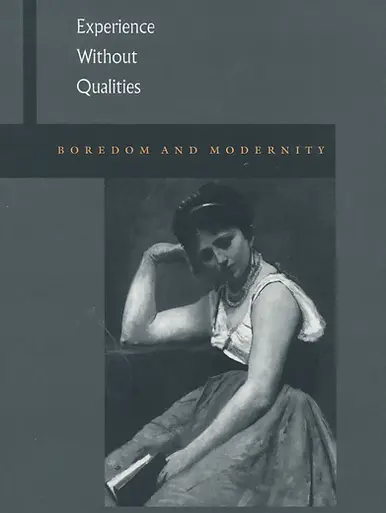
Boredom is often understood to be a perennial feature of the human condition, yet it is linked to ways of experiencing time and thinking about human existence that are recognizably modern. Experience without Qualities brings literary, historical, and philosophical perspectives on boredom as a specifically modern crisis of meaning into conversation. It thereby develops analytic strategies that are of broader application in interdisciplinary inquiry since the methodological problems that arise in thinking about boredom illuminate the constraints that confront attempts to reflect historically on subjective experience in modernity more generally.
Modern Language Association Prize for a First Book (2004)
German Studies Association/DAAD Book Prize (2006)
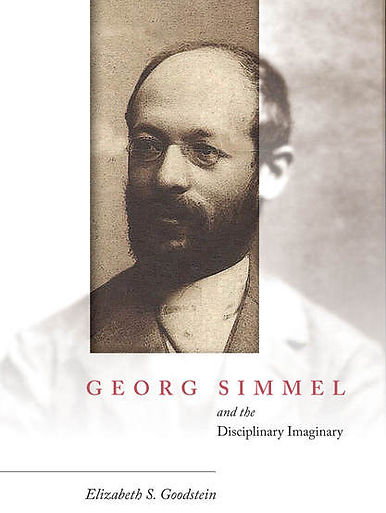
An internationally famous philosopher and bestselling author during his lifetime, Georg Simmel has been marginalized in contemporary intellectual history. This neglect belies his pathbreaking role in revealing the theoretical significance of phenomena (including money, gender, urban life, and technology) that subsequently became established arenas of inquiry in cultural theory—as well as his philosophical impact on thinkers as diverse as Benjamin, Musil, and Heidegger. Georg Simmel and the Disciplinary Imaginary excavates the interlocking histories of memory and forgetting that shaped Simmel's posthumous reception, disclosing new conceptual and theoretical resources in an oeuvre that resists disciplinary categorization.
"The most important study of philosopher Georg Simmel ever to appear in English, this book does more than contribute to our understanding of a major modern thinker: it offers a fascinating analysis of knowledge formation at the turn of the twentieth century and is a crucial addition to our understanding of Western modernity itself.”
Michael Jennings, Princeton University
Related Essay:
“Spectacular Desolation: Boredom as a Political Phenomenon,”
The History and Philosophy of Boredom, ed. Andreas Elpidorou and Josefa Ros Velasco, Routledge, 2025, 228-250.
.jpeg)